
When Exhaustion Behind the Wheel Becomes a Legal Crisis
In 2023, 633 lives were lost nationwide due to drowsy-driving-related crashes, according to NHTSA; this number varies significantly from year to year. If you’ve been impacted by a collision with a fatigued truck driver in Utah, you’re likely questioning whether the driver could face criminal prosecution beyond civil compensation. The intersection of federal trucking regulations, Utah state law, and sleep-deprived driving creates a complex legal landscape affecting victims’ rights.
Understanding when truck driver fatigue crosses from civil to criminal territory requires examining federal Hours of Service regulations and Utah’s reckless driving charges. While most trucking accidents remain in civil courts, certain circumstances involving extreme negligence or previous violations can elevate drowsy driving to criminal charges.
💡 Pro Tip: Document any evidence of driver fatigue immediately after an accident, including witness statements about erratic driving, the time of crash (especially between midnight and 6 a.m.), and any driver admissions about their sleep schedule.
If you’re entangled in the aftermath of a drowsy driving collision, let Lowe Injury Law steer you toward justice. Our seasoned team will stand by your side, ensuring that every legal angle is covered and your rights are protected. Don’t wait—reach out today at 801-960-4575 or contact us to take the first step towards resolution.
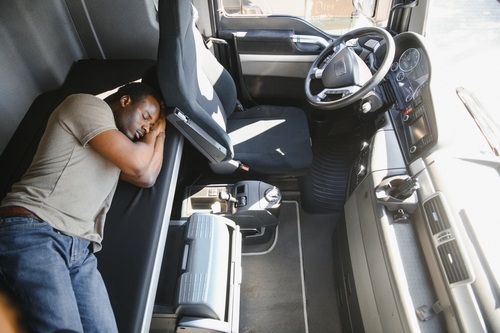
Your Rights When Facing a Fatigued Trucker’s Negligence
Federal law mandates that carriers and drivers operating commercial motor vehicles comply with Hours of Service regulations in 49 CFR 395. These legally binding requirements prevent fatigue-related crashes. When a semi-truck accident lawyer in Provo investigates your case, they’ll examine whether the driver violated federal standards, including the required 30-minute break after 8 cumulative hours of driving.
Utah law provides multiple avenues for accountability. Beyond civil liability, prosecutors can pursue criminal charges when driver fatigue rises to reckless endangerment or criminal negligence. This dual-track approach means victims may see both civil compensation and criminal justice proceedings, though each follows distinct timelines and burdens of proof.
Evidence supporting your civil case often becomes crucial in criminal proceedings. Electronic logging devices (ELDs), mandatory since December 18, 2017, are designed to automatically record driving time by connecting to the vehicle’s engine; rest periods and other duty-status changes must be entered manually by drivers and are then timestamped by the device, though records can still be tampered with or falsified despite being more accurate than traditional paper logs. When logs show clear violations, particularly in crashes during midnight-6 a.m., prosecutors gain powerful evidence of willful disregard for public safety.
💡 Pro Tip: Request preservation of all electronic logging device data as soon as possible; federal regulations require motor carriers to retain ELD records of duty status and supporting documents for six months and maintain a backup copy on a separate device for that same period.
The Path from Accident to Criminal Charges: What to Expect
The journey from a drowsy driving crash to potential criminal charges follows a specific sequence. Unlike typical accidents, commercial vehicle crashes trigger both state and federal investigations. Here’s what typically unfolds:
- Immediate investigation by Utah Highway Patrol or local police with commercial vehicle enforcement officers
- Within 24-48 hours, federal investigators may join if interstate commerce or fatalities are involved
- Electronic logging devices are analyzed against mandatory rest periods under FMCSA regulations
- Prosecutors review evidence over days to weeks, considering violation severity, prior offenses, and falsified logs
- Charging decisions vary widely and may take days, weeks, or longer depending on case complexity
- Victims receive notification and may be called as witnesses, while civil cases proceed separately
A semi-truck accident lawyer in Provo can help victims understand how criminal proceedings might affect their civil case timeline and recovery options.
💡 Pro Tip: Criminal cases in Utah must be filed within statute of limitations periods, typically four years for felonies and two years for misdemeanors, but evidence preservation for your civil case should begin immediately.
Pursuing Justice Through Criminal and Civil Courts
When drowsy driving crashes devastate Utah families, justice often runs through both criminal and civil courtrooms. Lowe Injury Law understands how criminal charges against a fatigued truck driver can strengthen your civil case. Criminal convictions or guilty pleas become powerful evidence of liability, often streamlining civil proceedings and potentially increasing settlements.
Prosecutors decide criminal charges, but your cooperation and preserved evidence can influence decisions. Utah prosecutors consider: degree of sleep deprivation, Hours of Service violations, falsified logbooks, prior violations, and injury severity. Understanding these factors helps victims provide compelling evidence.
Even without criminal charges, civil remedies remain robust. The civil burden of proof, preponderance of evidence, is lower than the criminal standard of beyond reasonable doubt. A semi-truck accident lawyer in Provo can often secure compensation even when prosecutors decline charges.
💡 Pro Tip: Coordinate with your civil attorney before providing statements in criminal proceedings, strategic considerations about testimony timing and scope can impact your civil recovery.
Hidden Dangers: How Trucking Companies Enable Driver Fatigue
Behind every exhausted truck driver lies industry pressures prioritizing profits over safety. Understanding these systemic issues helps identify all liable parties. Trucking companies face intense competition and tight schedules, creating environments where drivers feel pressured to skirt federal rest requirements.
Modern technology should make FMCSA Hours of Service regulations easier to enforce, but some carriers circumvent safeguards through dual logbooks, pressuring off-duty driving, or structuring routes that technically comply but ignore cumulative fatigue. When a semi-truck accident lawyer in Provo uncovers these practices, cases can involve corporate liability and punitive damages.
Recognizing Signs of Systemic Fatigue Problems
Red flags indicating dangerous fatigue culture include: unrealistic delivery schedules requiring maximum legal hours, high driver turnover suggesting burnout, multiple fleet violations indicating poor compliance, and payment structures rewarding longer hauls without rest consideration. Attorneys examine patterns across entire company fleets.
Company dispatchers play a crucial role in driver fatigue. When dispatchers assign loads requiring maximum hours or immediate returns after minimum rest, they contribute to the problem. Evidence of dispatcher communications pushing tight deadlines can establish company liability beyond individual driver actions.
💡 Pro Tip: Check the trucking company’s safety record through the Federal Motor Carrier Safety Administration’s SAFER system, multiple fatigue violations across their fleet strengthen your case.
Utah’s Unique Approach to Prosecuting Drowsy Driving
While federal regulations set baselines, Utah prosecutors have developed specific strategies for commercial vehicle fatigue cases. The state’s mountainous terrain and major interstate corridors create particular risks when drowsy truckers navigate challenging roads. Utah law allows prosecutors to pursue criminal charges including automobile homicide (which can be charged as a second-degree felony for criminal negligence) and reckless driving when commercial vehicle operators cause deaths through negligent or criminally negligent conduct, but there is no established Utah court precedent specifically recognizing that operating an 80,000-pound vehicle while fatigued demonstrates extreme indifference to human life.
The intersection of drowsy driving prevention efforts and criminal law in Utah has evolved significantly. Prosecutors now use expert testimony about sleep science and fatigue impairment, comparing sleep deprivation to alcohol intoxication. This scientific approach helps juries understand why attorneys pursue both criminal cooperation and civil damages.
Building a Criminal Case: Evidence That Matters
Utah prosecutors seek specific evidence: cell phone records showing late-night activity during sleep periods, receipts documenting energy drink purchases, GPS data revealing erratic driving patterns consistent with microsleeps, and witness testimony about pre-crash behavior. Provo’s traffic camera network often captures crucial footage showing fatigue signs like lane departures or delayed reactions.
Crash timing provides critical evidence. NHTSA data showing drowsy crashes occur most frequently between midnight and 6 a.m. resonates with Utah juries. When crashes occur during peak fatigue hours with Hours of Service violations, prosecutors gain compelling evidence of criminal recklessness.
💡 Pro Tip: Document all evidence of the driver’s activities in the 24 hours before the crash, social media posts, fuel receipts, and dining records can establish sleep deprivation patterns supporting criminal charges.
Frequently Asked Questions
Understanding Criminal Charges in Trucking Cases
Victims often have pressing questions about how criminal charges work in drowsy driving truck accidents, from what triggers prosecution to how proceedings affect civil claims.
💡 Pro Tip: Keep a detailed journal of all interactions with law enforcement and prosecutors, this helps your civil attorney coordinate strategies and avoid conflicts between proceedings.
Navigating the Legal Process
The parallel tracks of criminal and civil cases can seem overwhelming, but understanding the process helps victims make informed decisions. Each serves different purposes though they rely on similar evidence.
💡 Pro Tip: Request victim services coordination through the prosecutor’s office, many Utah counties offer advocates to guide you through criminal proceedings while you work with your civil attorney.
1. What evidence typically leads to criminal charges against a drowsy truck driver in Utah?
Criminal charges require evidence beyond simple fatigue: falsified logbooks, patterns of intentional Hours of Service violations (exceeding the 11-hour driving limit by more than three hours, i.e., about 14+ hours total, which the FMCSA classifies as an egregious violation subject to maximum civil penalties; while repeated or knowing and willful violations may lead to criminal charges, a single egregious violation alone does not automatically constitute a pattern), previous fatigue warnings, statements admitting to hallucinations or falling asleep, or crashes during high-risk hours with catastrophic consequences. Electronic logging device data proving systematic violations significantly strengthens cases.
2. Can I still pursue a civil case with a semi-truck accident lawyer in Provo if criminal charges aren’t filed?
Absolutely. Criminal charges require proof beyond reasonable doubt, while civil cases need only prove negligence by preponderance of evidence. Your attorney can use the same evidence to prove liability and secure compensation, regardless of prosecutorial decisions.
3. How do federal Hours of Service violations impact potential criminal charges?
Violations like the mandatory 30-minute break after 8 hours provide concrete evidence of negligence. When drivers violate these rules and cause serious crashes, prosecutors can argue reckless disregard for safety. Multiple or extreme violations, especially with falsified logs, significantly increase criminal charge likelihood.
4. What’s the typical timeline for criminal charges to be filed in a drowsy driving truck accident?
Timing varies significantly based on case complexity, severity of injuries, and evidence availability. Police investigations can take days to weeks, and prosecutors review evidence before deciding whether to file charges; there is no standard 30-60 day timeline. Prosecutors must file within Utah’s statute of limitations, four years for felonies, two years for misdemeanors. However, evidence preservation for your civil case should begin immediately.
5. Should I cooperate with criminal investigators if I’m also pursuing a civil claim?
Yes, but coordinate with your civil attorney first. Criminal prosecution can strengthen your civil case through admissions, guilty pleas, or convictions. Your attorney can help you provide helpful information while protecting civil interests and ensuring statements align with your overall legal strategy.
Work with a Trusted Semi-Truck Injury Lawyer
When drowsy driving crashes shatter lives, victims need attorneys who understand both criminal and civil aspects. The decision between immediate civil action or waiting for criminal proceedings requires careful analysis of evidence, damage assessment, and strategic planning. The complexity of federal trucking regulations combined with Utah’s approach to prosecuting fatigued drivers demands thorough investigation and advocacy from attorneys familiar with both systems.
In the aftermath of a drowsy driving incident, trust Lowe Injury Law to navigate the path to justice with you. Our dedicated team will help ensure your rights are upheld and every legal avenue is explored. Take the first step today—reach out at 801-960-4575 or contact us.